Sunday, August 23, 2026

Coyotes at the Curb, Bears in the Pool, Lions in the Yard

Living on California’s New Wildlife Frontier

There is a moment in Southern California when the mountains change. The green of winter and spring disappears, the hillsides turn brown, creeks shrink or vanish, and the chaparral that looked almost welcoming a few months earlier becomes dry, brittle, and unforgiving. Temperatures climb, sometimes brutally, and water becomes harder for wildlife to find.

Then the neighborhood sightings begin. A coyote trots down a residential street as though it owns the place. A bear wanders into a backyard where a swimming pool offers something increasingly difficult to find in the surrounding hills. A mountain lion appears near homes, sidewalks, and traffic. For those of us living along the foothills of the San Gabriel Mountains, these encounters can seem less exotic than they once did. The wilderness is not somewhere hours away. It is right there above the houses, and sometimes it comes down the hill.

Earlier this month, that reality became impossible to ignore in San Dimas. On August 7, 2026, authorities responded to a mountain lion in a residential area near Foothill Avenue. The animal was tranquilized and taken for veterinary examination. The story subsequently took a sad turn. Wildlife officials reported that the approximately two-year-old male had a fractured pelvis and lung contusions. Because of the severity of its injuries, the animal was euthanized. The precise cause of the injuries was not determined, although wildlife officials noted that vehicles are a leading cause of wildlife deaths in Los Angeles County (Smith, 2026).

It would be tempting to look at a mountain lion appearing in San Dimas during a hot Southern California summer and draw a straight line between the temperature and the animal's presence, but nature is rarely that simple. Heat matters, and so does water, but so do development, wildfire, habitat fragmentation, prey movement, food availability, injuries, reproduction, and the simple fact that Southern California has built millions of homes next to, and sometimes directly into, wildlife habitat.

The California Department of Fish and Wildlife acknowledges the larger trend. The department reports that habitat loss and a changing climate have increased the frequency and types of human-wildlife conflicts reported in California. At the same time, communities continue to expand along the wildland-urban interface while animals search for limited resources, including food, water, and habitat (California Department of Fish and Wildlife [CDFW], n.d.-a). That makes the animals appearing in our neighborhoods something more than isolated curiosities. They are signs of an increasingly crowded frontier.

Coyotes figured this out long before we did. Of the larger wild animals encountered around Southern California neighborhoods, coyotes are probably the most successful urban adapters. They can live in rural country, foothills, residential neighborhoods, and surprisingly dense urban environments. They travel through washes, parks, greenbelts, and drainage systems before crossing streets and sidewalks that humans assume separate civilization from wilderness.

To a coyote, those distinctions are largely meaningless. A neighborhood may contain rodents, rabbits, fruit, water, pet food, garbage, and, unfortunately, unattended small pets. CDFW describes coyotes as highly adaptive omnivores capable of consuming everything from rodents and rabbits to fruit, pet food, human food, and trash (CDFW, n.d.-b). Their ability to take advantage of what people leave behind is one reason they have become so successful in developed areas.

Seeing a coyote during daylight should not automatically create panic. The greater concern comes when coyotes become habituated to people or learn that human neighborhoods reliably provide food. We often think feeding wildlife means intentionally tossing food to an animal, but it can be much less obvious. An overflowing garbage container feeds wildlife. Pet food left on a patio feeds wildlife. Birdseed attracts rodents, which in turn attract predators. Fallen fruit becomes food. A small dog left unattended may be viewed very differently by a coyote than it is by its owner.

CDFW recommends securing trash and pet food, supervising small pets, bringing pets inside at night, and keeping dogs leashed when coyotes are present. When a coyote approaches, residents are advised to keep their distance, make noise, and make themselves appear larger rather than encouraging the animal to become comfortable around people (CDFW, n.d.-b). The objective is not to eliminate coyotes from Southern California. It is to prevent them from becoming so accustomed to people that coexistence turns into conflict.

Bears present a different problem. There is something almost comical about the sight of a black bear sitting in a Southern California swimming pool. It can look like an oversized neighborhood dog that has discovered the deep end. From the bear's perspective, however, the backyard may contain exactly what it needs. There may be water in the pool, fruit on the ground, trash beside the garage, food smells coming from a barbecue, bird feeders, pet food, compost, or perhaps an open garage containing even more interesting smells.

The California black bear is an omnivore and an opportunist. CDFW notes that bears consume plants, berries, insects, and other animals, but they will also readily consume pet food, human food, and garbage. The danger increases when bears repeatedly obtain food around people because they can become food-conditioned and lose their natural fear of humans (CDFW, n.d.-c).

That distinction matters because the problem is not necessarily the bear that wanders through a neighborhood once. The larger problem may be the bear that learns something from the experience. A bear that discovers an easy meal has a reason to return, and a bear that repeatedly finds unsecured garbage has effectively learned where dinner is served. Human behavior can gradually transform an interesting wildlife encounter into a recurring wildlife conflict.

That is why bear-management recommendations often sound less dramatic than people expect. Residents are encouraged to secure garbage, pick ripe fruit, collect fallen fruit, clean barbecue grills, remove food and strongly scented items, bring pets inside, and remove bird feeders where bears are a problem (CDFW, n.d.-c). None of these actions is particularly heroic, and that is precisely the point. Coexisting with wildlife usually depends less upon dramatic confrontations than upon preventing the confrontation from developing in the first place.

Then there is the mountain lion. Coyotes may create concern and bears may generate excitement, but mountain lions produce something more primal. A mountain lion appearing at the edge of a yard immediately changes the atmosphere. Yet mountain lions belong in California. CDFW notes that they occupy forests, foothills, coastal regions, rural landscapes, and the wildlife-urban interface. They are generally solitary and reclusive and usually avoid people. Deer are an important prey species, which means that landscapes attractive to deer can also become landscapes of interest to mountain lions (CDFW, n.d.-d).

Once again, our map and the animal's map are not the same. We see a subdivision where a mountain lion may see a travel route interrupted by houses. We see a landscaped greenbelt where it may see cover. We see deer eating roses at the edge of somebody's yard where a predator sees prey. We see Foothill Boulevard as part of the transportation network, while a mountain lion encounters a dangerous obstacle cutting across the landscape.

The San Dimas lion illustrates that last point painfully well. Although officials did not establish how the animal suffered its injuries, the fractured pelvis and lung injuries discovered after its capture remind us that the wildlife-urban interface is dangerous for animals as well as people (Smith, 2026). The collision between suburbia and wildlife is therefore not simply a public-safety problem. It is also a landscape problem.

Southern California has spent generations building communities against some of the most dramatic natural terrain in America. That is part of the attraction. People pay a premium for homes near mountains, canyons, open space, and trails. We want the view, the quiet, and hiking paths only minutes from home. Then occasionally something walks out of that landscape and into ours, except "ours" may be the wrong word.

Look at a foothill community from above and the artificial boundaries become obvious. Streets and houses interrupt washes and canyons. Freeways slice across natural movement routes. Golf courses and parks create patches of green. Flood-control channels, utility corridors, and narrow strips of undeveloped land can become pathways through developed areas. Humans see property lines, city limits, streets, and subdivisions. Wildlife sees terrain, food, water, cover, prey, obstacles, and possible routes around them.

This does not mean every wildlife sighting is caused by human development, nor should every appearance of a bear, coyote, or mountain lion be attributed to climate change or extreme heat. That would replace one oversimplification with another. What the evidence does support is a convergence of pressures. California wildlife officials identify habitat loss and a changing climate as factors associated with increased human-wildlife conflict. Expanding communities place more people along the wildland boundary, animals continue searching for food, water, and habitat, and human neighborhoods unintentionally provide resources that some species learn to exploit (CDFW, n.d.-a).

Extreme heat can make that relationship much more visible. When the hills are dry and temperatures soar, a green suburban landscape containing irrigation, shade, pools, and food can look very different to an animal than it does to us. The swimming pool that represents recreation to a homeowner may represent water to a bear. The landscaped yard that represents curb appeal may offer cover or prey to another animal.

That creates responsibilities on both sides of the wildlife frontier, although only one side understands the concept. The coyote cannot understand a property line. The bear does not know the swimming pool is private. The mountain lion does not recognize Foothill Boulevard as the dividing line between its world and ours. People do understand those distinctions, which places much of the responsibility for reducing conflict on us.

Residents along the wildland-urban interface can secure garbage, eliminate unnecessary food attractants, pick up fallen fruit, and avoid leaving pet food outside. Small pets should be supervised, especially when wildlife is active. People living in mountain lion country can reduce hiding places around homes, discourage deer from congregating on their property, and secure animals at night. CDFW advises people encountering a mountain lion not to run, but instead to face the animal, remain upright, make noise, appear larger, and give it an escape route (CDFW, n.d.-d).

There is a balance here that is sometimes difficult to maintain. Fear is not particularly useful, but neither is familiarity. A coyote is not a neighborhood dog. A bear in a swimming pool is not an amusement attraction. A mountain lion resting beneath a tree is not an invitation to get closer for a better photograph. They are wild animals, and respecting that fact protects people, pets, and the animals themselves.

Perhaps that is the real lesson emerging from California's wildlife frontier. For generations we have treated wilderness as a destination. We packed the car, drove into the mountains, parked at a trailhead, and entered "the wild." The distinction seemed obvious. Civilization was where we lived, while wilderness was someplace we visited. For millions of people living along Southern California's foothills, however, that distinction was always partly imaginary.

The wilderness begins at the edge of the subdivision. It may follow the wash behind the houses, cross beneath a freeway, move through a greenbelt, or appear briefly on a security camera in the middle of the night. During a hot, dry Southern California summer, it may walk down the sidewalk or step directly into the backyard.

When that happens, our first reaction is often that something has gone wrong. The coyote is where it should not be. The bear has invaded our neighborhood. The mountain lion has somehow crossed the boundary separating nature from civilization. But nature never agreed to that boundary. We drew it, built across it, landscaped it, and then became surprised when animals continued moving through it.

The coyote at the curb, the bear in the pool, and the lion in the yard are reminders that Southern California remains a wild place beneath the freeways, subdivisions, and shopping centers we have built across it. The challenge ahead is not simply figuring out how to keep wildlife out of our neighborhoods. It is learning how millions of people can live responsibly beside animals that were here long before the neighborhood had a name.

References

California Department of Fish and Wildlife. (n.d.-a). Human-wildlife conflicts toolkit. State of California.

California Department of Fish and Wildlife. (n.d.-b). Human-wildlife conflicts: Coyotes. State of California.

California Department of Fish and Wildlife. (n.d.-c). Human-wildlife conflicts: Black bears. State of California.

California Department of Fish and Wildlife. (n.d.-d). Human-wildlife conflicts: Mountain lions. State of California.

Smith, D. (2026, August 14). Hurt mountain lion found in San Dimas neighborhood euthanized, CDFW says. NBC Los Angeles.

Tuesday, July 14, 2026

Heat-Related Illnesses: Recognizing the Danger Before It Becomes an Emergency

Every summer, high temperatures send thousands of people to emergency departments and contribute to preventable deaths across the United States. Whether you're working outdoors, attending a community event, exercising, hiking, or simply spending time in the sun, understanding heat-related illnesses can help protect you, your family, and those around you.

Many people think of extreme heat as little more than an inconvenience. In reality, prolonged exposure to heat can overwhelm the body's natural cooling system. Normally, the body regulates its temperature through sweating and increased blood flow to the skin. When these mechanisms can no longer keep pace with environmental conditions or physical exertion, heat-related illness can develop. Recognizing the early warning signs and responding quickly can prevent a medical emergency.

Understanding Heat-Related Illness

Heat-related illnesses exist along a spectrum, ranging from relatively mild conditions such as heat rash and heat cramps to heat exhaustion and the life-threatening condition known as heat stroke. While heat exhaustion can progress to heat stroke if left untreated, heat stroke can also develop rapidly without obvious warning, particularly during strenuous physical activity in hot or humid conditions.

Understanding the difference between the two most serious forms of heat illness is essential.

Heat Exhaustion

Heat exhaustion is the most common significant heat-related illness. It develops when the body loses excessive amounts of water and electrolytes through sweating and begins to struggle to regulate its temperature.

Common symptoms include:

  • Heavy sweating

  • Cool, pale, clammy skin

  • Fatigue or unusual weakness

  • Dizziness or lightheadedness

  • Headache

  • Muscle cramps

  • Nausea or vomiting

  • Rapid, weak pulse

  • Fainting

Although heat exhaustion is a serious condition, it usually responds well when recognized early and treated promptly.

Heat Stroke

Heat stroke is a true medical emergency.

It occurs when the body's temperature regulation fails, allowing the core body temperature to rise to dangerously high levels while causing injury to the brain and other vital organs. Heat stroke can occur suddenly, especially during strenuous activity in hot weather.

Symptoms may include:

  • Confusion or unusual behavior

  • Slurred speech

  • Difficulty walking

  • Seizures

  • Loss of consciousness

  • Hot skin that may be either dry or still sweating

  • Rapid, strong pulse

A very high body temperature strongly supports the diagnosis, but you should never delay treatment while attempting to obtain a thermometer reading. If someone exposed to significant heat develops confusion, altered mental status, seizures, or becomes unconscious, treat the situation as heat stroke and call 911 immediately.

Why the Difference Matters

Heat exhaustion is the body's warning that it is struggling to cool itself. Heat stroke means that cooling has failed and the body's organs are in danger.

Someone experiencing heat exhaustion is usually awake, alert, and able to follow instructions. A person with heat stroke often becomes confused, disoriented, combative, or unconscious. Any change in mental status during significant heat exposure should be treated as a medical emergency.

Fortunately, recognizing heat exhaustion early and responding promptly can prevent some cases from progressing to heat stroke.

Ten Ways to Reduce Your Risk

1. Stay Hydrated

Drink water regularly throughout the day rather than waiting until you feel thirsty. During prolonged activity involving several hours of heavy sweating, an electrolyte-containing beverage or salty foods may help replace minerals lost through perspiration. Individuals with heart disease, kidney disease, or fluid restrictions should follow their healthcare provider's recommendations.

2. Schedule Activities During Cooler Hours

Whenever possible, perform strenuous work or exercise during the early morning or evening. During periods of extreme heat, pay attention to the local Heat Index or HeatRisk forecast rather than relying solely on the clock.

3. Dress for the Weather

Wear lightweight, loose-fitting, light-colored clothing that allows sweat to evaporate efficiently. A wide-brimmed hat and sunglasses provide additional protection from direct sunlight.

4. Take Frequent Cooling Breaks

Whether working or exercising outdoors, rest regularly in shaded or air-conditioned areas. Short cooling breaks allow your body to recover before dangerous overheating occurs.

5. Use Air Conditioning When Available

Air conditioning is one of the most effective protections against heat-related illness. Even spending a short period in an air-conditioned building during the hottest part of the day can significantly reduce your risk.

6. Allow Your Body Time to Adjust

If you are not accustomed to hot weather, gradually increase outdoor activity over one to two weeks. This process, known as acclimatization, allows your body to become more efficient at regulating its temperature.

7. Protect Yourself from the Sun

Sunburn reduces your body's ability to regulate heat. Apply a broad-spectrum sunscreen with an SPF of at least 30 and reapply according to the manufacturer's directions.

8. Avoid Alcohol and Limit High-Caffeine Energy Drinks

Alcohol can contribute to dehydration and impair judgment during hot weather. While moderate amounts of coffee or tea generally contribute to daily fluid intake, avoid relying on highly caffeinated energy drinks instead of water during prolonged heat exposure.

9. Never Leave Children or Pets in Vehicles

Temperatures inside a parked vehicle can become deadly within minutes, even when the outside temperature feels only moderately warm and even if the windows are partially open.

10. Know Who Is Most at Risk

Older adults, infants, young children, outdoor workers, athletes, people with chronic medical conditions, and individuals taking certain medications are more susceptible to heat-related illness. During heat waves, check on family members, neighbors, and coworkers who may need assistance.

What to Do if Someone Shows Signs of Heat Illness

If you suspect someone is suffering from heat exhaustion, act promptly.

Move the person to a cool or shaded location. Loosen or remove unnecessary clothing. Apply cool, wet towels to the skin or use fans to increase cooling. If the person is fully awake, not vomiting, and able to swallow normally, encourage them to take small sips of cool water. Allow them to rest and monitor them closely. If symptoms worsen, fail to improve within about an hour, or the person begins showing signs of confusion or altered behavior, seek immediate medical care.

If you suspect heat stroke, call 911 immediately.

While waiting for emergency medical services:

  • Move the person to a cooler or shaded location.

  • Remove excess clothing.

  • Begin rapid cooling immediately.

  • If it can be done safely, immerse the person in cold water, which is the fastest and most effective cooling method.

  • If immersion is not possible, soak the person's skin with cool water, place cold packs or wet towels around the neck, armpits, and groin, and fan continuously to accelerate cooling.

  • Do not give food or drinks to anyone who is confused, vomiting, having a seizure, or unconscious.

Do not delay treatment while waiting for emergency responders. Rapid cooling greatly improves the chances of survival and reduces the risk of permanent organ damage.

Prevention Is the Best Treatment

The vast majority of serious heat-related illnesses can be prevented. Staying hydrated, dressing appropriately, taking regular cooling breaks, and recognizing the early signs of heat exhaustion can stop a dangerous situation before it becomes life-threatening.

Perhaps the most important lesson is this: listen to your body. Dizziness, weakness, nausea, muscle cramps, unusual fatigue, or lightheadedness during hot weather are not signs of toughness to overcome. They are your body's warning that it is struggling to keep itself cool.

Ignoring those warning signs can turn a preventable condition into a life-threatening emergency. Responding early—by cooling down, resting, and hydrating—may be the difference between spending a few minutes in the shade and requiring emergency medical care.

As summers grow hotter and periods of extreme heat become more common, understanding heat-related illness is no longer simply useful knowledge. It is an essential life skill that can help protect you, your family, and your community.

This revised version reflects current guidance from organizations such as the CDC, NIOSH, OSHA, and MedlinePlus, while remaining accessible to a general audience. It also avoids a few common misconceptions, such as assuming heat stroke always develops gradually or waiting for a specific temperature reading before seeking emergency care.


Sunday, May 24, 2026

AI Is Making Up Hunting and Fishing Rules — And People Are Paying for It

For decades, hunters and anglers worried about bad weather, bad maps, or bad luck. Now there is a new threat in the field: bad artificial intelligence answers.

Wildlife agencies across the United States are warning hunters and fishermen that relying on AI-generated answers for regulations can lead directly to citations, fines, suspended licenses, and even criminal charges. The problem is not theoretical anymore. It is already happening.

In Idaho, conservation officers reported that hunters were showing up in the field with incorrect information pulled from AI-generated search results. According to Idaho Fish and Game, some hunters relied on artificial intelligence summaries for season dates and regulations, only to discover the information was wrong after being cited by game wardens. (Idaho Fish and Game)

One documented case involved a waterfowl hunter who allegedly hunted a day early because AI search results pulled information from a proposed regulation instead of the final approved season dates. Wildlife officials later confirmed that the AI system confused draft proposals with actual law. (Incident Database)

That should concern every hunter and angler in America.

Story One: Duck Hunters on the Wrong Day

According to reporting from Cowboy State Daily and Idaho Fish and Game officials, several duck hunters reportedly entered the field believing the season was open because AI-generated search summaries told them so. Unfortunately, the actual regulations listed a different opening day. (Cowboy State Daily)

The hunters still received citations.

That is one of the hardest realities about hunting law: “AI told me” is not a legal defense. State wildlife agencies consistently remind sportsmen that they are personally responsible for knowing the law, regardless of where they got the information. (Wyoming Game and Fish Department)

Story Two: The Wrong River, Wrong State

Another problem discovered by Idaho officials involved fishing regulations. AI systems reportedly mixed up rivers with similar names located in different states. In at least one example, regulations for another state were attached to an Idaho river because the AI system pulled information based on keyword similarity instead of legal accuracy. (Boise State Public Radio)

To an angler standing beside a riverbank, that mistake could mean illegal bait, illegal limits, or fishing in restricted waters without realizing it.

Again, the citation would still belong to the fisherman.

Story Three: AI Turning Failed Bills Into “Law”

Wyoming Game and Fish officials discovered another dangerous problem. Some AI-generated search summaries were reportedly referencing failed legislative bills as if they were current law. In some cases, the information was “in direct opposition to the actual laws and regulations,” according to Wyoming officials. (Wyoming Game and Fish Department)

That means a hunter could unknowingly rely on regulations that never even passed.

Wyoming law enforcement supervisors warned that hunters and anglers relying on inaccurate AI interpretations could face fines, jail time, or suspension of hunting privileges. (Wyoming Game and Fish Department)

Why AI Gets This Wrong

Artificial intelligence is extremely good at sounding confident. That is part of the problem.

AI systems do not “understand” hunting regulations the way a wildlife attorney or conservation officer does. They predict answers based on patterns found across the internet. If outdated regulations, draft proposals, forum posts, or old news articles appear online, AI may blend them together into a response that sounds authoritative but is completely wrong.

Researchers call this phenomenon “hallucination,” where AI generates plausible but false information. Recent academic studies found that large language models routinely fabricate citations and factual details, especially in fast-changing or specialized fields. (arXiv)

Hunting and fishing laws are especially vulnerable because:

  • regulations constantly change,

  • seasons vary by region,

  • emergency closures happen quickly,

  • and rules can differ by weapon type, species, or public land unit.

In other words, hunting regulations are almost the perfect environment for AI mistakes.

So Should Hunters Avoid AI Completely?

Not necessarily.

AI can still be useful if people understand what it is good at — and what it is not.

Artificial intelligence works best as a research assistant, not a legal authority. Hunters and anglers can use AI to:

  • explain terminology,

  • summarize general concepts,

  • help locate agency websites,

  • create packing lists,

  • compare gear,

  • or organize trip planning.

But when it comes to actual laws and regulations, mainstream best practice is simple: go directly to the official source.

That means:

  • reading printed regulation booklets,

  • checking state wildlife agency websites,

  • downloading official PDFs,

  • signing up for agency alerts,

  • and calling local game wardens or regional offices if something is unclear.

Those recommendations are exactly what Idaho and Wyoming officials are now urging the public to do. (Idaho Fish and Game)

The Smart Way to Work With AI

The best outdoorsmen will probably learn to combine both old-school habits and modern technology.

A smart approach looks something like this:

  1. Use AI for general research and trip preparation.

  2. Verify every regulation with official state publications.

  3. Download the current regulations directly from agency websites.

  4. Double-check emergency closures before leaving home.

  5. Treat AI answers as starting points, never final authority.

Because in the woods, on the river, or standing beside a game warden, confidence means nothing if the information is wrong.

And as more hunters discover, artificial intelligence can sound absolutely certain right before it gets you a ticket.

Friday, May 15, 2026

When the Wilderness Bites Back

For many people, hiking represents freedom. The trail promises peace, exercise, adventure, and escape from the pressures of modern life. Towering pine trees, distant mountain ridges, and the silence of untouched wilderness can make nature feel almost sacred. Yet beneath that beauty lies a harsh truth: the wilderness does not care whether humans survive in it. Every year, hikers across America discover that nature can shift from breathtaking to terrifying in seconds. A peaceful trail can suddenly become the setting for panic, injury, or death when wildlife turns dangerous. From grizzly bears and rattlesnakes to aggressive moose and swarming insects, the wilderness can bite back with little warning.

The danger begins with one of the most feared animals in North America: the bear. Few wildlife encounters inspire as much fear as seeing a massive grizzly emerge from dense forest. Grizzlies can weigh over 700 pounds and possess enormous strength, speed, and aggression when threatened. While black bears are more common and generally less aggressive, they can still attack when cornered, startled, or conditioned to human food. Many hikers mistakenly believe bears are slow-moving creatures, but a charging bear can outrun even the fastest human. In bear country, one careless decision—such as storing food improperly or wandering silently through thick brush—can lead to disaster.

Yet the danger of bears often comes not from predatory behavior but from surprise. A hiker rounding a corner may suddenly find themselves between a mother bear and her cubs. In that instant, instinct takes over. The bear sees the human as a threat, and the human feels overwhelming panic. The wilderness offers no pause button in moments like these. There is no time to search the internet for advice or wait for help. Survival depends entirely on preparation, awareness, and calm decision-making under extreme stress.

Snakes present another serious danger on the trail, especially in warmer regions of the United States. Rattlesnakes are responsible for the majority of venomous snakebites in North America. Unlike bears, rattlesnakes often remain hidden until the last moment. A hiker stepping over a rock or reaching into brush may unknowingly place a hand inches away from a coiled snake. The famous rattle acts as a warning, but not every snake gives notice before striking. Venom can cause severe pain, tissue damage, paralysis, and in rare cases death if treatment is delayed.

Part of what makes snakes terrifying is their invisibility. A bear may be heard crashing through brush, but a rattlesnake blends perfectly into dirt, rocks, and leaves. Many experienced hikers describe the psychological impact of hearing a sudden rattle at close range. It is an ancient fear deeply rooted in human instinct. Even after surviving the encounter, the hiker may spend the rest of the journey anxiously scanning every inch of the trail.

Perhaps the most underestimated dangerous animal is the moose. Unlike predators, moose do not hunt humans, yet they injure large numbers of people every year. Standing over six feet tall at the shoulder and weighing up to 1,500 pounds, a moose can become highly aggressive during mating season or when protecting calves. Many hikers assume herbivores are harmless because they do not eat meat. That assumption can prove disastrous. A charging moose can trample a person with tremendous force, and unlike predators that may stop once the threat disappears, an enraged moose may continue attacking repeatedly.

One reason wildlife encounters become dangerous is because humans often misunderstand animal behavior. Tourists in national parks regularly approach bison, elk, or bears for photographs, believing the animals are calm because they appear motionless. In reality, wildlife can shift from stillness to violence instantly. Bison, for example, may seem slow and peaceful while grazing, but they can sprint faster than Olympic runners. Every year, people are injured because they ignore warning signs and underestimate the raw power of wild animals.

Mountain lions represent another terrifying possibility in the wilderness. These elusive predators rarely attack humans, but when they do, the results can be deadly. Cougars often stalk silently from a distance before striking. Unlike bears, which may bluff charge or vocalize, mountain lions are ambush predators. Hikers who are alone, small in stature, or moving quietly are at greater risk. Children are especially vulnerable. Experts advise hikers never to run from a cougar because fleeing may trigger the predator’s instinct to chase.

The fear surrounding mountain lions comes from the knowledge that hikers may never see them until it is too late. Many people later discover, through tracks or wildlife camera footage, that a cougar had been watching them during part of their hike. This realization reinforces an uncomfortable truth: humans are not always the dominant species in the wilderness. Sometimes people are simply another animal moving through predator territory.

Not all dangerous animals are large. In fact, some of the deadliest creatures on the trail are tiny. Ticks, mosquitoes, and bees kill or hospitalize far more people each year than wolves or mountain lions. Ticks spread Lyme disease, Rocky Mountain spotted fever, and other serious illnesses that can permanently affect the nervous system and heart. Mosquitoes carry diseases such as West Nile virus. Meanwhile, bee or wasp stings can trigger fatal allergic reactions within minutes. A hiker deep in the wilderness who enters an unseen hornet nest may face hundreds of stings before escaping.

These smaller dangers reveal another reality about nature: danger does not always look dramatic. Hollywood often portrays wilderness threats as giant predators attacking campers, but many real-life emergencies begin with something as simple as an insect bite. The wilderness can destroy a person slowly through infection, dehydration, venom, or exhaustion just as easily as through violence.

Human behavior frequently increases the risks hikers face. Many accidents happen because people ignore basic safety principles. Some hikers leave marked trails, underestimate weather conditions, fail to carry water, or attempt dangerous hikes without preparation. Others feed wildlife, creating animals that lose fear of humans. Social media has worsened this problem by encouraging people to chase dramatic photos or videos in dangerous environments. Too often, hikers move closer to wildlife for the perfect image, forgetting they are dealing with unpredictable animals rather than tourist attractions.

Despite these dangers, millions of people continue to hike every year, and most return safely. The goal of understanding wildlife threats is not to create fear of nature but to encourage respect for it. Wilderness areas are not amusement parks designed for human comfort. They are ecosystems governed by survival, instinct, and natural law. Animals defend territory, protect offspring, hunt prey, and react to threats exactly as nature intended.

Preparation is the key to survival in the wild. Experienced hikers carry bear spray, first aid supplies, maps, water filtration systems, and emergency communication devices. They research local wildlife before entering an area. They hike in groups when possible and make noise in dense terrain to avoid surprising animals. Most importantly, they understand that confidence should never become arrogance. Nature rewards awareness and punishes carelessness.

Ultimately, the wilderness remains both beautiful and dangerous because it is one of the few places on Earth still beyond complete human control. In cities, humans dominate the environment through technology, laws, and infrastructure. On the trail, however, people return to a world where instinct and survival still rule. The wilderness reminds humanity that despite all modern advancement, humans are still vulnerable creatures within the natural order.

When the wilderness bites back, it does not act out of cruelty or revenge. Nature is neither evil nor merciful. It simply exists according to its own rules. Those who enter wild places must respect those rules or face the consequences. The trail offers wonder, solitude, and adventure, but it also demands humility. In the end, the wilderness teaches a lesson older than civilization itself: beauty and danger often walk side by side.

Thursday, April 30, 2026

The Anti-Fall Workout: Strength Exercises That Protect You From Injury

One of the greatest threats to independence after the age of 65 is not disease—it’s a fall. A single misstep on a curb, a moment of imbalance on the stairs, or a loss of strength when standing up can change everything. But here’s the truth: most falls are not random accidents. They are predictable—and more importantly, preventable.

The solution is not to move less. It is to train better.

The Anti-Fall Workout is designed to build the strength, balance, and coordination needed to move through life with confidence. This is not about lifting heavy weights or pushing limits. It’s about reinforcing the movements you use every day—so your body is prepared when it matters most.


Catch Yourself

Actual Exercise: Goblet Squat
Purpose: Builds lower body strength to prevent sudden collapses and improve stability.
How to Perform: Hold a dumbbell close to your chest. Stand with feet shoulder-width apart. Lower your hips back and down like sitting in a chair. Keep your chest upright. Press through your heels to stand.


Climb Without Fear

Actual Exercise: Dumbbell Step-Ups
Purpose: Improves leg strength, coordination, and balance for safe stair and curb navigation.
How to Perform: Hold dumbbells at your sides. Step onto a sturdy platform with one foot. Press through your heel to stand tall, then step down slowly. Alternate legs.


Stay Standing Strong

Actual Exercise: Dumbbell Farmer’s Carry
Purpose: Strengthens the core and grip while improving posture and walking stability.
How to Perform: Hold a dumbbell in each hand. Stand tall and walk forward slowly with controlled steps, keeping shoulders back and core engaged.


Pick It Up Safely

Actual Exercise: Dumbbell Romanian Deadlift
Purpose: Strengthens the hips, hamstrings, and lower back for safe bending and lifting.
How to Perform: Hold dumbbells in front of your thighs. Hinge at the hips while keeping your back straight. Lower the weights along your legs, then return to standing.


Pull Yourself Back

Actual Exercise: Dumbbell Bent-Over Row
Purpose: Improves posture and strengthens the upper back to help regain balance when leaning forward.
How to Perform: Hold dumbbells and hinge slightly at the hips. Keep your back flat. Pull the weights toward your torso, squeezing your shoulder blades together, then lower slowly.


Push Yourself Up

Actual Exercise: Dumbbell Chest Press
Purpose: Builds upper body strength needed to push up from a bed, chair, or the floor.
How to Perform: Lie on a bench or floor holding dumbbells. Press the weights upward until arms are extended, then lower under control.


Reach Without Losing Balance

Actual Exercise: Dumbbell Lateral Raise
Purpose: Improves shoulder strength and coordination for safe reaching movements.
How to Perform: Hold dumbbells at your sides. Raise your arms out to shoulder height, then lower slowly with control.


Stand on One Leg Strong

Actual Exercise: Assisted Single-Leg Balance
Purpose: Develops balance and ankle stability—key factors in fall prevention.
How to Perform: Stand near a wall or chair for support. Lift one foot slightly off the ground and hold your balance. Switch sides.


Turn and Stay Stable

Actual Exercise: Controlled Dumbbell Rotation
Purpose: Improves coordination and stability during turning movements.
How to Perform: Hold a light dumbbell with both hands. Slowly rotate your torso side to side while keeping your hips stable and movements controlled.


Get Up Off the Floor

Actual Exercise: Floor Get-Up (Modified if needed)
Purpose: Teaches safe recovery after a fall and builds confidence.
How to Perform: Practice moving from a seated or lying position on the floor to standing using controlled movements and support as needed.


How to Use This Program

Perform this workout 2–3 times per week. Complete 2–3 sets of 8–12 repetitions for each exercise, or use timed intervals for balance and carries. Focus on slow, controlled movement rather than speed or heavy weight. Rest as needed between exercises.

The goal is not exhaustion—it is control, confidence, and consistency.


Conclusion

Falls are not just accidents. They are often the result of lost strength, reduced balance, and decreased confidence in movement. The good news is that every one of these can be improved at any age.

This workout is not about building a better body—it’s about building a more capable life.

Train today so you can move freely tomorrow.


Disclaimer

Before beginning any exercise program, consult with your physician or a qualified healthcare provider, especially if you have pre-existing medical conditions, injuries, or concerns. It is strongly recommended to work with a certified fitness professional to ensure proper technique, safety, and appropriate progression when learning these exercises.piece)


Saturday, April 25, 2026

The Grandchild Snatch: A Functional Strength Program for Active Aging

Aging does not mean slowing down—it means training smarter. The goal of fitness after 65 is not aesthetics or competition, but independence, confidence, and the ability to perform everyday tasks without assistance. The following workout reframes traditional dumbbell exercises into meaningful, real-life movements. Each exercise connects directly to activities of daily living, reinforcing strength where it matters most: in how you live.


Grandchild Snatch

Actual Exercise: Goblet Squat
Purpose: Strengthens the legs and hips for safe lifting and standing—essential for picking up a grandchild or rising from a chair.
How to Perform: Hold a dumbbell close to your chest. Stand with feet shoulder-width apart. Lower your hips back and down as if sitting in a chair. Keep your chest upright. Press through your heels to return to standing.


Push Yourself Out of Bed

Actual Exercise: Dumbbell Chest Press
Purpose: Builds upper body pushing strength needed for getting out of bed or pushing up from the floor.
How to Perform: Lie on a bench or floor with a dumbbell in each hand. Press the weights upward until arms are extended, then lower slowly back down.


Pull the Laundry Basket

Actual Exercise: Dumbbell Bent-Over Row
Purpose: Strengthens the back and improves posture for pulling movements and reducing upper back strain.
How to Perform: Hold dumbbells, hinge slightly at the hips, and keep your back flat. Pull the weights toward your torso, squeezing your shoulder blades together, then lower with control.


Pick Up the Grocery Bags

Actual Exercise: Dumbbell Romanian Deadlift
Purpose: Strengthens the hamstrings and lower back for bending and lifting safely.
How to Perform: Hold dumbbells in front of your thighs. Hinge at the hips while keeping your back straight. Lower the weights down your legs, then return to standing by engaging your hips.


Climb the Stairs Strong

Actual Exercise: Dumbbell Step-Ups
Purpose: Improves leg strength, coordination, and balance for stair climbing and fall prevention.
How to Perform: Hold dumbbells at your sides. Step onto a sturdy platform with one foot, press through the heel to stand, then step back down with control. Alternate legs.


Put the Suitcase in the Overhead Bin

Actual Exercise: Dumbbell Overhead Shoulder Press
Purpose: Develops shoulder strength for reaching and lifting overhead safely.
How to Perform: Sit or stand holding dumbbells at shoulder height. Press the weights upward until arms are extended, then lower slowly back to the starting position.


Carry the Grandkids’ Toys

Actual Exercise: Dumbbell Bicep Curl
Purpose: Strengthens the arms for carrying and lifting objects.
How to Perform: Hold dumbbells at your sides. Curl the weights toward your shoulders, keeping elbows close to your body, then lower slowly.


Push Open the Heavy Door

Actual Exercise: Dumbbell Triceps Extension
Purpose: Builds arm strength for pushing movements like opening doors or rising from a chair.
How to Perform: Hold one or two dumbbells overhead. Bend your elbows to lower the weight behind your head, then extend your arms back up.


Reach for the Top Shelf

Actual Exercise: Dumbbell Lateral Raise
Purpose: Improves shoulder mobility and strength for reaching tasks.
How to Perform: Hold dumbbells at your sides. Raise your arms out to the sides until shoulder height, then lower slowly.


Carry the Groceries Home

Actual Exercise: Dumbbell Farmer’s Carry
Purpose: Enhances grip strength, core stability, and full-body endurance for carrying tasks.
How to Perform: Hold a dumbbell in each hand and walk with good posture, keeping your shoulders back and core engaged.


Important Disclaimer

Before beginning any exercise program, consult with your physician or a qualified healthcare provider, especially if you have any pre-existing medical conditions, injuries, or concerns. It is also highly recommended to seek guidance from a certified fitness professional to ensure proper technique, safety, and appropriate progression when learning these movements.This program is more than a workout—it is a commitment to maintaining strength, dignity, and independence for the years ahead.

Sunday, April 19, 2026

The Day the Ground Remembered

For most people, Yellowstone National Park is a place of beauty—geysers erupting on schedule, bison moving slowly across open plains, steam rising gently from the earth like breath on a cold morning. It feels alive, but in a quiet, predictable way. What is easy to forget—what is almost impossible to feel while standing there—is that the ground beneath Yellowstone is not stable. It is patient.

Yellowstone sits atop one of the largest volcanic systems on Earth, a supervolcano that has erupted catastrophically in the distant past. Scientists monitor it constantly. Instruments measure ground uplift, seismic activity, and the movement of magma miles below the surface. Most days, the data is reassuring. Small earthquakes occur, but they are expected. The ground rises and falls slightly, but within known patterns. It is a system that breathes, not one that screams.

But imagine the day that changes.

It begins quietly, almost invisibly. A swarm of earthquakes—more than usual—ripples through the park. Not a handful, but hundreds, then thousands, clustered tightly beneath the caldera. Rangers notice instruments behaving erratically. Scientists watching the data feeds see something unsettling: the quakes are becoming shallower, migrating upward. The ground begins to bulge—not inches, but feet—over a matter of days.

At first, officials reassure the public. Yellowstone has had earthquake swarms before. It is part of the system. But behind closed doors, the tone shifts. The models don’t align with past patterns. Heat readings spike. Geysers behave unpredictably, some going silent, others erupting violently and without warning. The park is closed “out of caution,” and evacuation plans are quietly activated.

Then comes the moment when the ground remembers what it is.

It doesn’t begin with a towering eruption. It begins with pressure—immense, incomprehensible pressure—finding a path. The earth fractures. Not in a single dramatic explosion, but in a series of violent ruptures across miles of land. Steam and gas burst upward in deafening blasts. Forests flatten. The sky darkens as ash begins to rise, not in a plume, but in a growing wall.

And then, finally, the eruption.

The caldera—Yellowstone’s vast volcanic basin—does not explode like a bomb. It collapses inward as magma chambers empty, releasing energy on a scale that defies ordinary comparison. The explosion sends a column of ash and gas tens of miles into the atmosphere. The sound is not a single boom but a sustained roar, like the earth itself tearing apart.

Within hours, ash blankets much of the western United States. Cities hundreds of miles away are plunged into darkness as the sky turns gray and then black. Breathing becomes dangerous. Engines fail. Power grids collapse under the weight of ash and disruption. Flights across the country—and eventually the world—are grounded as the atmosphere fills with abrasive volcanic particles.

Closer to Yellowstone, survival becomes nearly impossible. Pyroclastic flows—superheated clouds of gas and debris—race outward at hundreds of miles per hour, incinerating everything in their path. Entire landscapes vanish beneath them. Rivers boil. Wildlife disappears. What was once a national park becomes a vast, smoldering expanse of ash and glass.

But the true horror is not just the eruption—it is what follows.

Ash continues to fall for days, even weeks. Crops fail under the weight of gray dust. Water supplies are contaminated. Transportation grinds to a halt. Across the country, people look up at a sun that is dimmed, filtered through layers of ash in the atmosphere. Temperatures begin to drop. Scientists call it a volcanic winter.

Globally, the effects spread. Tiny particles injected into the upper atmosphere reflect sunlight back into space, cooling the planet. Weather patterns shift. Growing seasons shorten. Food shortages ripple across continents. Economies strain under the sudden, cascading disruptions.

And yet, even in this scenario, one detail remains important: such an event is extremely unlikely in any given human lifetime. Yellowstone is active, but it is also closely monitored. Scientists would almost certainly detect significant warning signs before a major eruption. Evacuation and response efforts would begin long before the worst occurred.

But the unease remains.

Because Yellowstone does not need to erupt tomorrow to matter. It exists as a reminder that beneath even the most peaceful landscapes, there are forces far older and more powerful than human systems. Forces that do not operate on human timelines, and do not respond to human control.

Standing in Yellowstone today, you might hear the hiss of steam, see the shimmer of heat rising from the ground, and feel nothing more than curiosity. But somewhere miles below, magma moves slowly, quietly, with no urgency at all.

It is not waiting.

It is simply there.

Saturday, January 31, 2026

After 60: Behind the Wheel and in the Wild

A Trunk Backpack That Protects Senior Drivers: What to Carry and Why It Matters

how abouFor many older adults, driving represents far more than transportation. It’s autonomy—medical appointments kept, groceries purchased on one’s own schedule, family visited without asking for a ride. But the reality of aging, changing weather, and unpredictable road conditions means a minor inconvenience (a dead battery, a flat tire, a wrong turn when the phone dies) can escalate faster for a senior than for a younger driver. Preparedness is not paranoia; it is a practical form of self-respect.

A “trunk backpack” emergency kit—kept in the trunk and easy to carry if you must leave the car—should be built around one simple goal: reduce risk during the most common roadside problems while supporting the needs that become more critical with age: warmth, hydration, medication continuity, clear communication, and visibility to other drivers. Major safety and preparedness organizations consistently recommend core items such as first aid supplies, warning devices, flashlights, phone power, water/food, blankets, and basic vehicle help like jumper cables or traction aids (American Red Cross, 2025; Ready.gov, 2025; National Highway Traffic Safety Administration [NHTSA], n.d.). What changes for seniors is how we prioritize and package those basics so they’re usable under stress.

Below are ten essentials—designed specifically for older drivers—that align with verifiable guidance while accounting for real-world senior needs.


1) Medication Continuity: The Senior “Must-Have”

The most important senior-specific addition to any car kit is a medication backup strategy. In an emergency—storm closures, detours, breakdowns, evacuation—refilling prescriptions may be delayed. Preparedness guidance emphasizes keeping necessary medicines as part of travel readiness (NHTSA, n.d.; Ready.gov, 2025). Public health guidance also recommends maintaining an up-to-date medication list and planning ahead with your doctor or pharmacist for an emergency supply (Centers for Disease Control and Prevention [CDC], 2024a; Ready.gov, 2025).

What to pack:

  • A small, clearly labeled pouch with a limited emergency supply of critical medications (only if safe and permitted by your prescribing plan).

  • A printed prescription list (drug name, dose, frequency, prescriber, pharmacy).

  • If any medicines require cooling, include a plan (small cooler + cold packs as appropriate), as health preparedness guidance notes refrigeration needs for some medications (CDC, 2024a).

For seniors, this is not optional. It’s the difference between discomfort and a medical crisis.


2) An “ICE” Card and Medical Information in Large Print

If a senior is disoriented, injured, or simply stressed, quick access to key information helps responders and good Samaritans. Keeping a large-print “In Case of Emergency” (ICE) card is a low-tech safeguard that complements a phone’s medical ID. CDC materials encourage older adults to track medications and personal health information consistently (CDC, 2024b; CDC, 2024c).

Include:

  • Emergency contacts

  • Allergies

  • Medical conditions

  • Current medications (or a pointer: “Medication list in pouch”)

  • Primary doctor and pharmacy

Laminate it or put it in a waterproof sleeve.


3) Power and Communication: Charger + Backup Battery

A charged phone is not just convenience—it’s navigation, weather alerts, roadside assistance, and family contact. Emergency kit guidance repeatedly highlights the importance of a phone charger/power source (American Red Cross, 2025; Ready.gov, 2025; NHTSA, n.d.). Seniors should assume that a breakdown might drain a phone faster than expected (cold weather, repeated calls, maps running).

Best practice for seniors:

  • A car charger that stays in the backpack

  • A power bank with a short, pre-attached cable (less fumbling)

  • A reminder to recharge the power bank monthly


4) Visibility: Reflective Vest + Warning Triangles (or Flares)

Many roadside deaths occur not from the original mechanical issue but from a secondary collision—drivers not seeing a stopped vehicle in time. Readiness guidance for car kits includes warning devices like reflective triangles or flares (Ready.gov, 2025; NHTSA, n.d.), and the Red Cross similarly emphasizes visibility items as core kit components (American Red Cross, 2025).

For seniors—who may move more slowly—being visible matters even more.

Pack:

  • A high-visibility reflective vest

  • Reflective warning triangles (often safer and longer-lasting than flares)

  • Optional: a small LED beacon

If you can safely remain in the vehicle while waiting for help, do so. But if you must exit, visibility is protection.


5) Light You Can Actually Use: Flashlight or Headlamp

Emergency guidance consistently includes a flashlight (American Red Cross, 2025; Ready.gov, 2025; NHTSA, n.d.). For seniors, usability is the key: arthritis, reduced grip strength, and low-light vision changes mean the tool must be simple.

Choose:

  • A bright LED flashlight with a single on/off switch, or

  • A headlamp (hands-free for tire checks)

Include spare batteries or choose rechargeable, but keep it maintained.


6) Warmth and Weather Protection: Blanket + Simple Layers

Cold stress can become dangerous quickly, and seniors often feel temperature shifts more intensely. Preparedness sources frequently recommend blankets and warm items in vehicle kits, particularly for winter travel (American Red Cross, 2025; NHTSA, n.d.; Ready.gov, 2025).

Pack:

  • A compact emergency blanket (Mylar) plus a small fleece throw

  • A lightweight rain poncho

  • Optional: hand warmers (especially helpful if circulation is an issue)

Warmth is not just comfort—it helps prevent shock and hypothermia.


7) Water and Easy-Open Food

Being stuck for hours happens: traffic closures, storms, dead batteries, accidents ahead. The Red Cross recommends water and non-perishable food as core kit items (American Red Cross, 2025), and federal safety guidance similarly includes water/food among emergency travel supplies (NHTSA, n.d.).

Senior-friendly approach:

  • Water bottles that are easy to open

  • Shelf-stable snacks that don’t require strong chewing: soft protein bars, crackers, nuts (if appropriate), applesauce pouches

  • If diabetes or other dietary constraints apply, tailor snacks accordingly


8) First Aid That Matches Likely Needs

A first aid kit is a universal recommendation (American Red Cross, 2025; NHTSA, n.d.). For seniors, include items that address common issues: minor cuts (thin skin bruises easily), sprains, and comfort while waiting.

Additions that help seniors:

  • Compression wrap (ankle/wrist support)

  • Instant cold pack

  • Nitrile gloves and antiseptic wipes

  • Spare pair of reading glasses (if you have an older backup)

  • A small notepad to record details after an incident (who, what, when)


9) Basic “Get-Home” Tools: Jump Start and Tire Basics

A dead battery is one of the most common roadside problems. Many vehicle-kit lists include jumper cables or a battery jump solution (American Red Cross, 2025; Ready.gov, 2025; NHTSA, n.d.). Seniors may prefer a compact jump starter because it removes the need to flag down another driver.

Practical senior options:

  • A portable jump starter (charged regularly) or quality jumper cables

  • Work gloves (protect hands and improve grip)

  • A small multi-tool

If a senior driver is not comfortable changing a tire, that’s fine—the goal is not to become a mechanic. The goal is to remain safe and stable until help arrives.


10) Mobility and Escape Tools: Seatbelt Cutter/Window Breaker + Comfort Aid

Preparedness isn’t only about breakdowns. It also means having a response to worst-case scenarios. A compact seatbelt cutter/window breaker can be lifesaving in rare but severe events. In addition, many seniors benefit from a small mobility support item.

Consider:

  • Seatbelt cutter/window breaker tool (keep one accessible in the cabin, and one in the kit for redundancy)

  • A foldable cane (if it’s part of your life)

  • Wet wipes and hand sanitizer (small comforts matter when you’re stressed)


How to Keep the Kit “Senior-Ready,” Not Just “Packed”

A kit only works if it’s current and usable:

  1. Keep it light enough to carry. A backpack that’s too heavy stays in the trunk when you need it most.

  2. Use pouches and large labels. In a stressful moment, you want “MEDS,” “FIRST AID,” “LIGHT,” not a jumble.

  3. Refresh it on a schedule. Check water, snacks, batteries, and the power bank at least every few months.

  4. Practice once. Know how to turn on the flashlight, where the triangles go, and how to use the charger.

Federal driving-safety guidance for winter travel specifically notes supplies like a flashlight, warning devices, first aid kit (including tourniquet), blankets, water/food, and necessary medicine—exactly the categories that matter most for seniors (NHTSA, n.d.). Ready.gov likewise lists car-kit basics such as jumper cables, flares/reflective triangle, phone charger, blanket, and map (Ready.gov, 2025). The Red Cross emphasizes a practical set of core items including first aid, flashlight, jumper cables, water/food, and warmth supplies (American Red Cross, 2025). When you combine that with public health guidance on maintaining medication lists and prescription planning, you have a strong, evidence-aligned blueprint that fits senior realities (CDC, 2024a; CDC, 2024b).


Conclusion: Preparedness as Independence

A senior driver’s emergency backpack is not about fear—it’s about preserving independence with dignity. It is a quiet promise you make to yourself and the people who care about you: “If something happens, I will be ready to stay safe, stay warm, stay visible, and stay in contact.”

If you’d like, I can turn this into a one-page printable checklist (large font), plus a monthly 5-minute refresh routine that makes it easy to maintain.


References (APA 7)

American Red Cross. (2025, January 21). Emergency car kit: 10 items you should have. https://www.redcross.org/take-a-class/resources/articles/car-emergency-kit-what-to-include

Centers for Disease Control and Prevention. (2024a, April 18). Prescriptions. https://www.cdc.gov/prepare-your-health/take-action/prescriptions.html

Centers for Disease Control and Prevention. (2024b, December 30). Medicines risk fact sheet | Older adult drivers. https://www.cdc.gov/older-adult-drivers/medicine/index.html

Centers for Disease Control and Prevention. (2024c). My medications list [PDF]. https://www.cdc.gov/older-adult-drivers/media/pdfs/MyMedications-List-Tribal.pdf

National Highway Traffic Safety Administration. (n.d.). Winter weather driving tips. https://www.nhtsa.gov/winter-driving-tips

Ready.gov. (2025, February 7). Car safety. https://www.ready.gov/car

Ready.gov. (2025, August 21). Build a kit. https://www.ready.gov/kit

Tuesday, January 13, 2026

Agencies Team Up to Restore Native Mussels to Ohio Waterway

A multiagency team took a hands-on approach to boosting native mussel populations in Ohio's Cuyahoga River this fall, marking a new chapter in efforts to restore the health of one of the state's most iconic waterways.

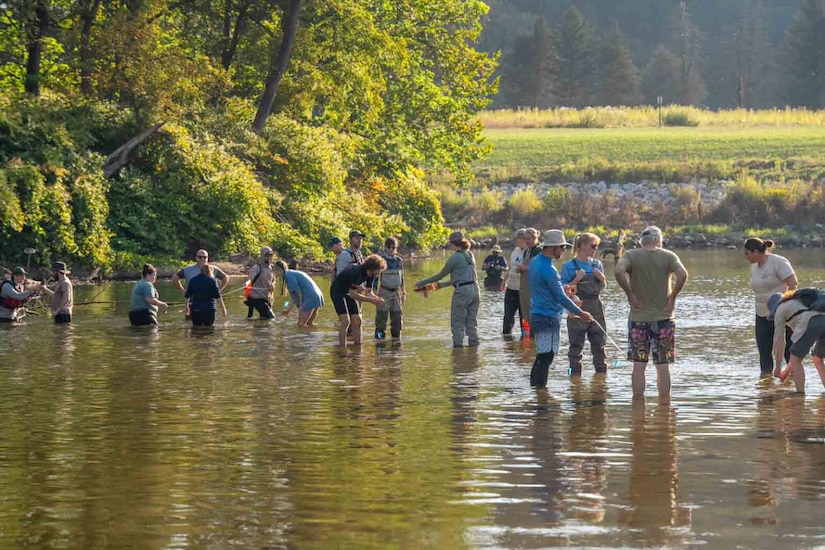
A group of people stand in calf deep water. A forest terrain is behind them.

Scientists and specialists from the U.S. Army Corps of Engineers, Buffalo District, worked alongside the National Park Service, U.S. Fish and Wildlife Service, Ohio Department of Natural Resources, Cleveland Metroparks, Cleveland State University, and Edge Engineering & Science to reintroduce hundreds of freshwater mussels into the river. 

The project centered on roughly 670 Fatmucket mussels, each outfitted with tiny, numbered tags and passive integrated transponder chips — the same type of microchips used to track household pets. The tags allowed researchers to monitor the mussels' movement, growth and overall health as they settled into their new environment. 

Working together in a science laboratory at Cleveland State University, the team spent long hours tagging the mussels in preparation for placing them at strategic locations throughout Cuyahoga Valley National Park in Peninsula, Ohio. 

Freshwater mussels have been found in the Cuyahoga River for hundreds of years, but industrial growth, dams and pollution sharply reduced their numbers. Their reappearance in the early 2000s followed significant improvements in water quality. 

Placing the mussels was a delicate task. Researchers made shallow divots in the riverbed — no bigger than a fingertip — and set each mussel in place with its foot down and siphon facing up. That orientation helped the mussels anchor themselves and begin filtering water, an essential step that will improve water quality and stabilized river sediment. 

Experts believe the return of these globally imperiled species could have an outsized impact. Healthy mussel communities support cleaner water, provide habitat for other organisms and strengthen the overall functioning of the river ecosystem. 

The long-term goal is to reestablish a thriving freshwater mussel community in the lower Cuyahoga River within Cuyahoga Valley National Park. U.S. Army Corps of Engineers and the National Park Service said the project aligns with their broader mission to restore and enhance the river's ecosystem for future generations.

Tuesday, January 6, 2026

Hiking Is Just Walking, Said No One on Mile Seven

Hiking is just walking.
That’s what people say before they go hiking.

Walking is what you do in a grocery store. Walking is what happens when you park too far away. Walking is casual. Walking allows opinions. Walking permits conversation.

Hiking, by mile seven, has stripped you of all non-essential functions.

At mile one, hiking feels like walking. You’re upright. You’re optimistic. You’re commenting on the weather like a professional meteorologist. You’ve already announced—out loud—that you should do this more often.

At mile two, you’re still walking, but now with purpose. Your stride lengthens. You start passing people and pretending it doesn’t matter. You tell yourself this pace is “sustainable,” which is hiker language for I will regret this shortly.

By mile three, the trail subtly changes character. Rocks appear—not enough to warn you, just enough to demand attention. The incline increases in a way that’s technically legal but morally questionable. You stop talking about the scenery and start talking about snacks.

Mile four introduces silence.

Not peaceful silence. Tactical silence. The kind where every word must justify its caloric cost. Conversation is replaced by breathing strategies you invent on the spot. Your calves send messages to your brain that sound like complaints filed in triplicate.

By mile five, walking has left the building.

This is now movement under negotiation.

You begin making deals with yourself:
Just get to that tree.
Okay, just past that bend.
Fine, just until your watch buzzes.

Your posture changes. Your arms are no longer decorative—they are now load-bearing. Your water bottle becomes both lifeline and emotional support object.

Mile six is where hiking becomes philosophical.

You start questioning earlier versions of yourself.
The trailhead version of you was reckless.
The mile-two version was arrogant.
The current version would like a quiet word with whoever suggested this route.

And then comes mile seven.

Mile seven is where the lie collapses.

Walking implies choice. Walking implies you could stop and still be okay. Walking implies dignity.

Mile seven does not.

At mile seven, you are not walking—you are continuing. Forward motion is no longer about progress; it’s about honor. Turning around would mean admitting that a dirt path defeated you, and that simply cannot be entered into the historical record.

Your thoughts narrow. The world becomes a sequence of footsteps and breath. You are acutely aware of every inch of your body and deeply suspicious of all of it. Muscles you’ve never met before introduce themselves aggressively.

Somewhere around here, someone will say, “We’re almost there,” which is a phrase that means absolutely nothing in the wilderness and should be regulated.

Eventually—through stubbornness, momentum, or sheer refusal to be embarrassed—you arrive.

You stop. You sit. You stare into the distance with the hollow confidence of someone who survived something unnecessary.

And later, when someone asks how the hike was, you’ll say:

“It was great. Just a nice walk.”

Because the final rule of hiking is this:
the suffering fades, the story improves, and the lie gets passed on to the next person.

Hiking is just walking—
until mile seven.

Sunday, December 28, 2025

Camping in December: Because Hypothermia Builds Character

The calendar may say December, but any seasoned outdoor enthusiast knows that nature does not consult human schedules. There is a peculiar blend of dread and anticipation that comes with packing your tent and sleeping bag when others are lighting fireplaces and pouring hot cocoa. Yet, as the winter of 2025 settles in, defined by powerful winter storms sweeping across the United States with heavy snow, ice, and severe weather warnings, the call of the cold outdoors has never sounded both more treacherous and more irresistible. Winter camping is not merely an activity; it is an immersive test of preparation, resilience, and, as many will insist, character-building. The bitter chill, the long nights, and the thawing sunrise all conspire to teach lessons that no summer outing can deliver.

This year’s winter conditions provide an apt backdrop for understanding the stakes of December camping. A major storm system sweeping from the Plains to the Northeast brought heavy snow, freezing rain, and dangerously low temperatures to large swaths of the country, creating hazardous conditions that disrupted travel and challenged even well-prepared outdoor adventurers. This storm illustrates the unpredictable and severe weather campers may confront on a cold-weather trip, reminding even the most confident backcountry enthusiasts that nature rules the terrain, not human intentions (AP News, 2025). Meanwhile, in California’s Sierra Nevada, recent avalanches triggered by snowmobilers have underscored the real risks associated with winter recreation in backcountry terrain, warning campers and hikers that deep snow and unstable conditions can shift from picturesque to perilous in moments (SF Chronicle, 2025).

But for those who embrace winter camping, these weather events are not deterrents; they are context. They are the challenge that makes the reward of a winter night by the fire so memorable. Setting up camp beneath a sky freckled with stars and waking to the crunch of frost underfoot brings a sense of achievement that no mild autumn hike can match. The solitude of a winter trail—where footprints may be scarce and silence deep—is a powerful contrast to the crowded summer campgrounds. Winter’s stillness offers a space for reflection, a chance to reconnect with the raw elements and test one’s limits against their own expectations.

Preparation differentiates those who suffer from those who thrive. The right gear—a sleeping bag rated for sub-freezing temperatures, insulating layers, high-quality footwear, and reliable tent stakes designed for frozen ground—is not optional. Unlike temperate weather camping, in winter anything less than optimal equipment quickly becomes a liability. Additionally, awareness of local conditions and advisories is crucial. The National Park Service, for example, regularly updates visitors on winter sports opportunities and weather alerts, emphasizing safe enjoyment of parks even in cooler months. Such guidance can make the difference between a memorable adventure and a dangerous situation. A well-planned strategy acknowledges both the beauty and the threat inherent in winter landscapes.

Learning to read the signs of winter weather is part of the craft. Clouds that herald snow squalls, wind that pierces even the warmest layers, and the creeping numbness of fingertips are all part of the language of cold-weather camping. These experiences sharpen judgment and foster respect for the environment. Campers learn to make decisions grounded not in bravado but in preparation and patience. Perhaps more importantly, winter camping teaches adaptability. Gear fails, conditions shift, and plans must change. The ability to adjust without panic builds confidence that carries beyond the trail.

Morning after a cold night outdoors brings its own rewards. The sun rising over frost-laced trees casts golden light that seems to glow all the more because of the darkness endured. Brewing hot coffee in a thermos on a frigid morning feels like a triumph. Friends and fellow campers share laughs over stiff gloves and frozen zippers, acknowledging that every shiver and early wake-up was part of the story worth telling. These moments forge memories stronger than any tale told by a summer fire.

Camping in December is not for everyone, and that is its charm. It demands respect for the elements, a keen awareness of weather conditions, and a commitment to safety. Yet the lessons learned—self-reliance, preparedness, patience, and appreciation for nature’s quieter seasons—are the real treasures of winter camping. In a world increasingly crowded and frenetic, the character built through uncomfortable cold nights and clear, star-filled skies is always earned, never given. In embracing the chill, campers find something glad and enduring, a reminder that occasionally stepping beyond comfort expands one’s sense of possibility.

References

AP News. (2025, December). Winter storm sweeps across US with snow, ice and severe weather.

SF Chronicle. (2025, December). Snowmobilers set off large avalanche in California avalanche search and rescue.

Friday, December 19, 2025

Shot Placement: Everyone Agrees Until the Deer Is Down

There are few phrases in the hunting world that carry more authority, certainty, and retrospective wisdom than “shot placement.” It is spoken with confidence before the hunt, with conviction after the hunt, and with absolute clarity by people who were not present at the moment of truth.

The image of the deer target says it all. There it stands—broadside, relaxed, perfectly still, with a brightly painted vital zone that might as well be labeled “Just Put It Here.” No wind. No brush. No quartering angle. No racing heartbeat. No buck fever. No twig that materializes out of thin air the moment you settle the crosshairs. Just a calm woodland scene and a deer that has clearly agreed to participate in your training exercise.

Real deer, however, did not attend this meeting.

In theory, shot placement is beautifully simple. Hunters have memorized the diagrams. They know the lungs, the heart, the shoulder line, and the ethical angles. They can recite the rules with the precision of a medical student. In camp, everyone nods. On the internet, everyone is an expert. On targets like this one, everyone is a surgeon.

Then comes the moment.

The deer moves. Or doesn’t. Or does something halfway between the two that physics textbooks have not yet explained. The wind shifts. Your foot falls asleep. Your release feels different. The animal is “quartering slightly,” which later turns out to mean anywhere from five degrees to “basically walking away.” The shot breaks. Time slows. And suddenly shot placement is no longer a concept—it’s a responsibility.

What follows is the reenactment.

Every hunter knows this ritual. A stick appears. The ground becomes a canvas. Angles are drawn. Distances are exaggerated. The phrase “right where I was aiming” is deployed with sincerity. Someone else nods, because they were there, and because someday it will be their turn. Each retelling nudges the impact point a little closer to the center of that painted circle.

Then comes the equipment phase.

Shot placement matters more than caliber, someone says—immediately before explaining why their caliber is the only ethical choice known to man. Bows, bullets, arrows, broadheads, grains, feet per second—all summoned as supporting evidence in a trial that no one asked to convene. The target deer, serene and unbothered, watches silently from the forest, its painted rings glowing with quiet judgment.

Eventually, reality enters on its knees.

The tracker looks at the ground. Blood is described using words that carry deep meaning in this world: good, sparse, frothy, dark, questionable. Conversations become shorter. Confidence fades into focus. Shot placement is no longer funny. It is practical, immediate, and humbling.

This is where the humor gives way to the truth hunters actually share but don’t always say out loud: almost everyone is trying to do the right thing. Ethical intent is real. Imperfection is unavoidable. And honesty about shots—good, bad, and ugly—is far more respectable than pretending the painted circle always wins.

The target deer is not a lie. It is a reminder. It shows what we aim for, not what always happens. It teaches anatomy without adrenaline, discipline without pressure, and humility without consequences. It exists so the real deer doesn’t have to teach harder lessons.

And that may be the greatest joke of all.

Because despite all the arguments, diagrams, debates, and post-hunt philosophy, the one rule that actually holds is this: do your best, know your limits, own the result, and tell the truth around the fire.

Shot placement isn’t about perfection. It’s about responsibility—preferably learned on foam, under calm skies, with a deer that never moves at all.

Wednesday, December 17, 2025

When the Hunt Bites Back: How Ticks Are Reshaping Wildlife, Hunting, and Outdoor Risk

A hunter can do everything right in the woods: read the wind, stay quiet, move with patience, and make a clean shot. Yet the most consequential “contact” of the day may happen without sound, blood trail, or even awareness. A tick is small enough to miss in the field, but large enough—through disease, wildlife impacts, and changing land conditions—to alter how people hunt and how game animals survive. Over the last several decades, ticks have become more than a nuisance on the edge of a sock. They now function as a practical risk factor that influences hunter behavior, field routines, wildlife health, and even management decisions in some regions.

Ticks are often casually grouped with insects, but they are arachnids, related to mites and spiders. This matters because their anatomy and feeding strategy are specialized for prolonged attachment and blood-feeding. Their success comes from patience and efficiency: they wait in vegetation, sense host cues, attach, feed for extended periods, and can transmit pathogens in the process. For hunters who spend long hours in brushy edges, grass, leaf litter, and game trails, the conditions of a “good hunting spot” can also be the conditions of ideal tick habitat (Centers for Disease Control and Prevention [CDC], 2024a).

Ticks thrive where hunting happens

Many hunting methods place people in tick habitat by design. Still-hunting and stalking push hunters through brush and leaf litter. Ground blinds and turkey setups keep hunters low and still near field edges. Tracking and blood trailing move hunters off trails and into dense cover. Even routine chores—setting cameras, checking stands, dragging game, and field dressing—create long exposure windows. The CDC emphasizes that ticks are commonly encountered in wooded and brushy areas with high grass and leaf litter, and that avoiding contact often means staying in the center of trails—advice that directly conflicts with how many hunters move through productive terrain (CDC, 2024a).

Tick risk is also seasonal in a way that overlaps hunting calendars. Early archery seasons, upland bird seasons, and fall scouting often occur when ticks are active and when temperatures encourage lighter clothing. When combined with sweat, kneeling, crawling, and pushing through cover, the practical reality is that hunters can rack up repeated exposures across a single weekend.

The life cycle that multiplies exposure

Ticks do not feed once and disappear. They develop through life stages (egg, larva, nymph, adult), and many species require multiple blood meals to complete their life cycle. In practical terms, a hunter can encounter different stages in different microhabitats and seasons. Nymphs are especially problematic from a human-risk standpoint because they are small and can be harder to detect, while still capable of transmitting pathogens (CDC, 2025). This is one reason hunters may come home feeling fine, only to discover a tick later or develop symptoms after a delay.

Range expansion and longer seasons change the “old map”

Historically, hunters learned local tick patterns the way they learned local wind, thermals, and terrain: by experience. But experience becomes less reliable when conditions change. Multiple research efforts have documented that key tick species are expanding their ranges and shifting distribution patterns, with climate conditions playing a role in survival, seasonal activity, and establishment in new areas (Gardner et al., 2020; Eisen et al., 2023). For hunters, this is more than a scientific abstraction. It means places that “never used to be a tick problem” can become a tick problem, and the window of risk can widen.

USGS reporting on surveillance and research efforts highlights concern that climate change can lengthen seasons favorable for ticks, creating more time and opportunity for spread (U.S. Geological Survey, 2025). While the details differ by species and region, the practical takeaway for hunting culture is the same: the mental model of “tick season” is getting less predictable, and tick pressure can appear earlier, last longer, or show up in new habitat types.

What ticks do to wildlife that hunters pursue

Ticks affect hunting not only by biting hunters but by impacting the animals hunters pursue and the ecosystems those animals depend on. Heavy infestations can cause direct physiological stress—blood loss, irritation, and energy diversion—especially when infestations are intense and prolonged. Winter tick (Dermacentor albipictus), sometimes called the “moose tick,” provides a vivid example of how severe those impacts can be for large mammals. Federal and conservation sources note that winter ticks can infest large mammals heavily, with consequences that include hair loss, anemia, and in severe cases death (U.S. Geological Survey, 2025). The U.S. Fish and Wildlife Service describes extreme tick loads on moose and reports substantial calf mortality associated with winter ticks in some areas, alongside efforts to explore biological control methods (U.S. Fish and Wildlife Service, 2023).

For hunters, these wildlife impacts matter in at least four ways.

First, animal condition changes what hunters observe. Hair loss, lethargy, poor body condition, and unusual grooming behavior can all become field cues that something is wrong. In some regions, hunters may encounter animals carrying visible tick burdens or signs of chronic stress. This changes the emotional experience of the hunt and can create ethical questions about what a hunter is seeing and whether to report it.

Second, tick pressure can affect movement patterns. Animals under parasite stress may alter bedding, seek different microclimates, or shift activity periods. Even subtle changes can affect success, because hunting often depends on predicting routine patterns—feed, water, bedding, travel corridors. If tick-heavy edges or damp draws become less desirable to animals at certain times, hunters may see fewer sightings or altered travel routes.

Third, disease dynamics in wildlife can shape herd health. Some tick-borne pathogens affect domestic animals and wildlife and can influence population-level health metrics. While not every tick carries a pathogen, and not every bite transmits disease, the ecological role of ticks as vectors is well established across multiple U.S. tick-borne diseases (CDC, 2025). From the hunter’s perspective, the key point is not to diagnose a deer in the field, but to recognize that parasites and pathogens can be part of the population story—especially when agencies report regional spikes in tick abundance or tick-borne illness.

Fourth, in some regions, tick-driven wildlife impacts can feed back into management decisions. The U.S. Fish and Wildlife Service notes that winter ticks have been associated with very high calf mortality in Vermont in recent years, emphasizing the seriousness of the issue for wildlife managers (U.S. Fish and Wildlife Service, 2023). Whether the management response is surveillance, research, habitat strategies, or population adjustments, hunters are stakeholders in that conversation.

The human cost: the hunt follows you home

For hunters, the primary human risk is not the bite itself but the diseases ticks can transmit. The CDC’s tick-borne disease materials emphasize that hunting brings people in close contact with ticks and encourages specific precautions for hunting season, including treating clothing and gear with 0.5% permethrin before hunting (CDC, 2020). This recommendation is echoed in CDC general prevention guidance, which explains that permethrin-treated clothing and gear can remain protective through several washings and that purchasing pre-treated clothing is an option (CDC, 2024a). State public health agencies provide similar prevention guidance, including permethrin-treated clothing and repellent use (California Department of Public Health, 2024).

The deeper problem is that tick-borne illness can be disruptive even when it is treatable, and it can be severe when diagnosis is delayed or when the illness is less familiar. The CDC’s clinician-focused manual on tick-borne diseases underscores the breadth of tick-borne diseases in the United States and the importance of appropriate prevention and recognition (CDC, 2025). For a hunting household, that translates into a practical reality: an exposure in the field can become weeks of uncertainty, medical visits, missed work, or lingering symptoms. It can also change how people participate in hunting—shorter sits, avoidance of certain cover, reduced enthusiasm for warm-weather scouting, or a shift to more “open” hunting styles.

Ticks also change family dynamics around hunting. Many hunters introduce children to the outdoors early, and the “after-hunt routine” increasingly includes tick checks, showering, and clothing handling. Hunters who travel to other states may also need to update prevention habits because tick species and risk profiles vary regionally.

How tick pressure changes hunting strategy

In practical terms, tick pressure alters hunting behavior in several predictable ways.

Clothing and movement choices shift. Hunters increasingly favor long pants even in warmth, tuck pants into socks or boots, and use gaiters. They may avoid kneeling in leaf litter, sit on pads, or use elevated stands more consistently. The CDC hunting-season guidance specifically recommends tucking pants into socks or boots as a barrier strategy, reinforcing this field logic (CDC, 2020).

Scouting and camera work become higher-risk exposures. A hunter may spend more time setting stands than hunting them, and that time often occurs in late summer and early fall, when vegetation is thick. Hunters may begin to choose routes that prioritize low tick contact rather than purely “quiet” approaches.

Time in the field may compress. In heavy tick conditions, a hunter might limit how long they remain in a ground blind or may avoid certain thickets even if those areas historically held deer. This can influence success rates, especially for hunters whose strategy depends on deep-cover patterns.

Scent-control routines can conflict with repellents. Some hunters worry that repellents will spook game or contaminate gear. Yet public health guidance continues to emphasize prevention. The result is a culture shift: prevention becomes part of the gear system, not an optional add-on.

Meat, ethics, and responsibility during field dressing

Ticks also show up at the most intimate point of the hunt: handling the animal. Field dressing and dragging game can bring hunters into contact with ticks on fur and in surrounding vegetation. Hunters may discover ticks moving off the animal or crawling on clothing during processing. While the presence of ticks is not the same as meat contamination, it does raise practical sanitation issues and increases the need for disciplined handling: keep gear organized, avoid placing clothing or gloves in leaf litter, and do thorough checks afterward.

There is also a stewardship dimension. Hunters are often among the first to notice unusual burdens, hair loss, or abnormal body condition. When these signs appear across multiple animals or in unusual seasons, reporting observations to wildlife agencies can contribute to surveillance and management. In an era where tick ranges can shift and outbreaks can emerge, hunters are not merely recreational users of wild spaces; they can function as field observers who help inform wildlife health awareness.

Prevention as skill: the new marksmanship

If ticks are now part of the hunting landscape, prevention becomes part of hunting competence. This is not about fear; it is about disciplined routine. The CDC’s recommendations are practical and field-compatible: treat clothing and gear with 0.5% permethrin, avoid brushing against high grass and leaf litter when possible, and perform thorough tick checks after outdoor activity (CDC, 2020; CDC, 2024a). State guidance reinforces similar measures and emphasizes treated clothing and repellents as part of prevention (California Department of Public Health, 2024).

Seen through a hunter’s lens, these steps mirror other hunting disciplines. Hunters already accept that hearing protection, blaze requirements, safe backstops, and careful knife work are non-negotiable. Tick prevention fits that same category: part of the responsible craft.

What comes next: hunting in a tick-dense future

Research and surveillance efforts point to continued attention on tick distribution and abundance. Studies tracking the range dynamics of major tick species and the environmental factors influencing establishment show that tick risk is not static (Gardner et al., 2020; Eisen et al., 2023). Federal agencies are investing in surveillance innovations and exploring management tools, including biological control methods in specific contexts (U.S. Fish and Wildlife Service, 2023; U.S. Geological Survey, 2025). For hunters, the key question is whether hunting culture adapts quickly enough to keep participation strong and safe as tick pressure changes.

The likely future is not a world where hunters stop hunting, but one where hunting becomes more intentional about invisible risks. That may mean more education in hunter safety courses, more public-facing guidance timed to seasons, and stronger partnerships between hunting communities and wildlife health professionals.

Conclusion

Ticks have always been present in the landscape, but their impact on hunting is becoming more consequential. They influence where hunters go, how long they stay, what they wear, and how they process game. They affect wildlife health through direct parasitic stress and disease dynamics, altering animal condition and potentially shifting movement patterns. They also pose a real human health risk that can outlast a season. In response, hunting is slowly adding a new discipline to the traditional toolkit: prevention as a practiced skill. The hunt still demands patience, restraint, and competence. Increasingly, it also demands that hunters respect what they cannot see.

References

California Department of Public Health. (2024, July 31). Tick-borne disease prevention. California Department of Public Health.

Centers for Disease Control and Prevention. (2020). It’s open season on ticks: Protect yourself from tickborne disease this hunting season. U.S. Department of Health and Human Services.

Centers for Disease Control and Prevention. (2024, August 28). Preventing tick bites. U.S. Department of Health and Human Services.

Centers for Disease Control and Prevention. (2025). Tickborne diseases of the United States: A reference manual for healthcare providers. U.S. Department of Health and Human Services.

Eisen, R. J., Kugeler, K. J., Eisen, L., Beard, C. B., & Paddock, C. D. (2023). Evaluation of the association between climate warming and increased incidence of tick-borne diseases in the United States. Parasites & Vectors, 16, Article 58.

Gardner, A. M., Hamer, S. A., & Hamer, G. L. (2020). Landscape features predict the current and forecast the future distribution of Ixodes scapularis and associated disease risk. Proceedings of the Royal Society B: Biological Sciences, 287(1935), 20202278.

U.S. Fish and Wildlife Service. (2023, February 8). Service supports winter tick research using fungi to decrease tick populations. U.S. Department of the Interior.

U.S. Geological Survey. (2025, May 6). Scent dogs join tick surveillance efforts. U.S. Department of the Interior.